Alla Prima Still Life Painting Elements Series Critiques + Demos (Online Course)
Dale Zinkowski
Students attend weekly during their registered 2 hour group critique slot with Dale but will receive access to all of the class recordings.
Round 2
Mondays 12PM – 2PM ET – please adjust for your time zone
March 9, 16, 23, 30, April 6, (no class April 13), 20, 2026
OR
Thursdays 2 PM – 4 PM ET – please adjust for your time zone
March 12, 19, 26, April 2, 9, (no class April 16), 23, 2026
OR
Thursdays 6 PM – 8 PM ET – please adjust for your time zone
March 12, 19, 26, April 2, 9, (no class April 16), 23, 2026
6 weeks
*Plus approximately 24 hours of recorded demos. Access provided a week before each live class session. There is an assignment due the first class.
Critiques + Demos : Tuition: $695 – includes the full series of weekly demos, your selected live critique sessions plus all the critiques recordings.
Note students taking both Round 1 AND Round 2 will receive a $300 discount on Round 2.
Demos only: Tuition: $75/ demo to register a la carte; $425 for the full series – this includes access to just the selected demo option, no critiques.
Limit: 5-6 students per critique day
Class Format Notes:
- Students will be automatically registered for the demo series to receive the weekly recordings.
- Students who select Demos only will receive the demo recordings, images, and materials list but not access to critiques.
Take this class:
- if you’d love to explore how GCA methods can be utilized to capture ‘freshness’ in still life painting.
- if you recognize that painting quicker studies and paintings would benefit your overall skill set.
- if you appreciate the benefit of weekly painting iterations for strengthening all the painting muscles.
- if you have some painting experience.
Is this class for me?
- If taking the critiques class, you will compose and paint a different painting every week from life. This takes at least 4-6 hours of preparation and painting.
- Prior experience working with oil paints is recommended.
- Some drawing experience, especially in the Academic method, is always useful for painting classes at the GCA.
- Taking GCA’s Orientation Seminar is helpful if you are new to GCA.
Online tech needs for Critiques:
- The critiques portion of the class will be conducted on the Zoom platform and is a live online experience.
- This demo series will be shared via a private video link on YouTube. YouTube is free but will require an account to view the video. Videos are accessible through August 31, 2025.
- Dale’s demos and critiques are recorded and made available so students can review them.
- This class also uses Google Classroom to distribute materials. Watch this video for more insight.
All of these services are free but require registration. - It will be necessary for students to have access to a computer, tablet or smartphone. The recommended device is a laptop or desktop.
“I have learned so much from Dale! He is such a generous and encouraging instructor. He meets each student where they are in their development and offers concrete help that not only leads to improving the painting being discussed, but to progressive improvement over the course of time. His demonstrations are inspiring (the paintings he makes for our benefit are stunning little gems), as well as deeply instructive. I am so grateful for all of it.” – Ruth
Course Description
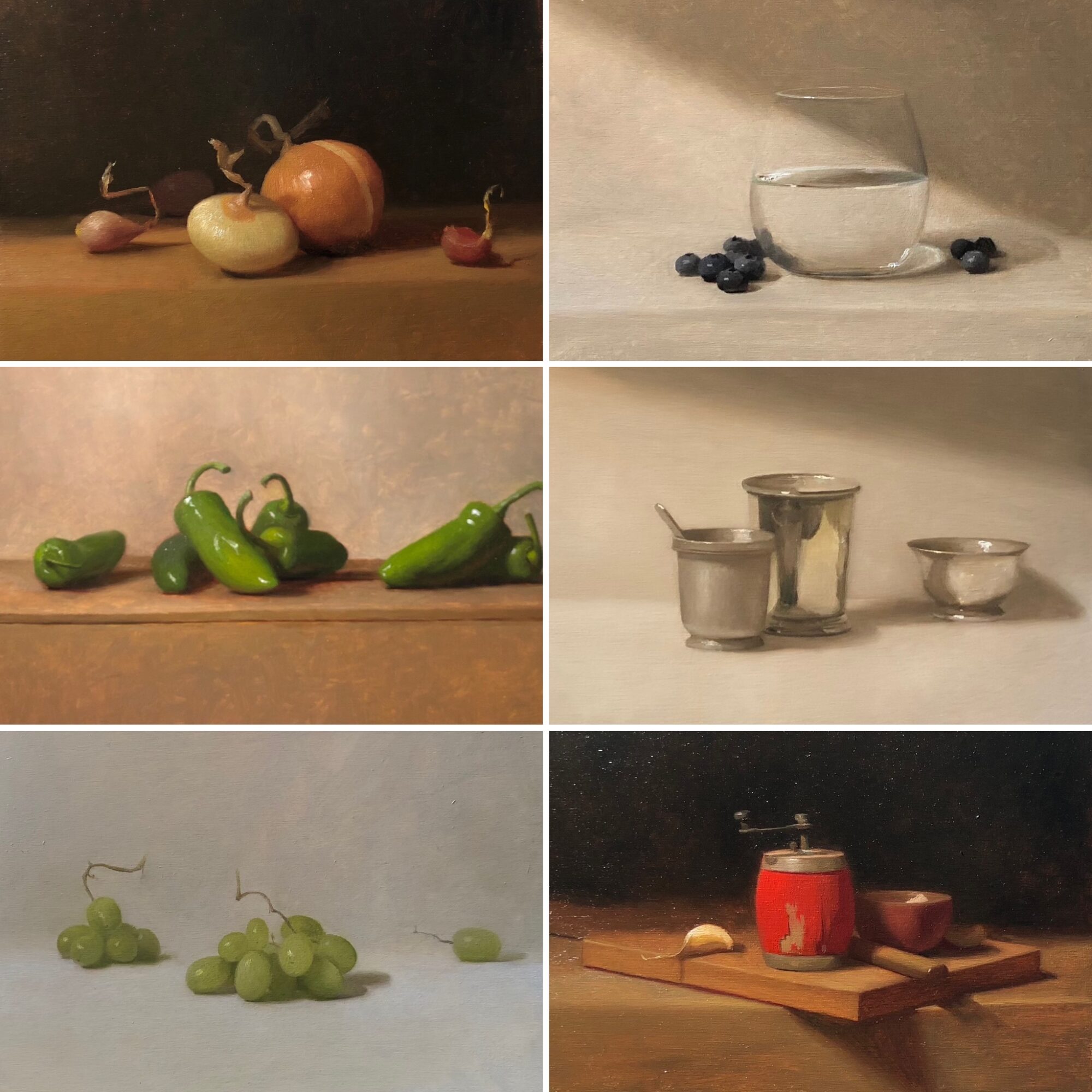
The theme for this semester’s alla prima still life painting series is elements. Each week we will choose still life objects that can invoke the sensual properties of the chosen element. Philosophical and tangible, these universal elements will ground you in your practice. We invite you to get creative with the weekly prompts as you determine your composition and strive to capture in paint the essence of these fundamental building blocks of life.
Each week, Dale will record a demo and discuss techniques as he works. After watching the demo, students will work on compositions based on the weekly theme to complete a four-hour still life painting from start to finish. The series will examine how to combine a practical understanding of color, values, edges, and paint handling (without second guessing) with the goal of completing an aesthetic, naturalistic painting. There will be a strong focus on sound drawing, composition, and shape design. Artists are encouraged to participate in the theme and embrace the weekly idea as simply or complexly as they desire.
Students may sign up for the full 6-week series with critiques or sign up solely for the demos (no critique access). Access to the demo will also include an online document with a list of the materials and a place to submit questions. The document will be updated with any submitted questions along with Dale’s answers.
Dale will hold critiques with only the students who signed up for the full course that includes the weekly critiques. During these sessions, Dale will discuss each student’s painting in depth and guide them in meeting their individual goals. Artists will submit images of their painting and set-up to Dale before each live weekly critique session.
EARTH:
Objects should be from the earth, on the earth, smelling or tasting of the earth – from beets to stones, mushrooms to leaves.
WATER:
Objects should include water or be related to water in some way. Items that live in the water like oysters and fishes are ok too! Vessels that carry water can also be a great way to tell the story.
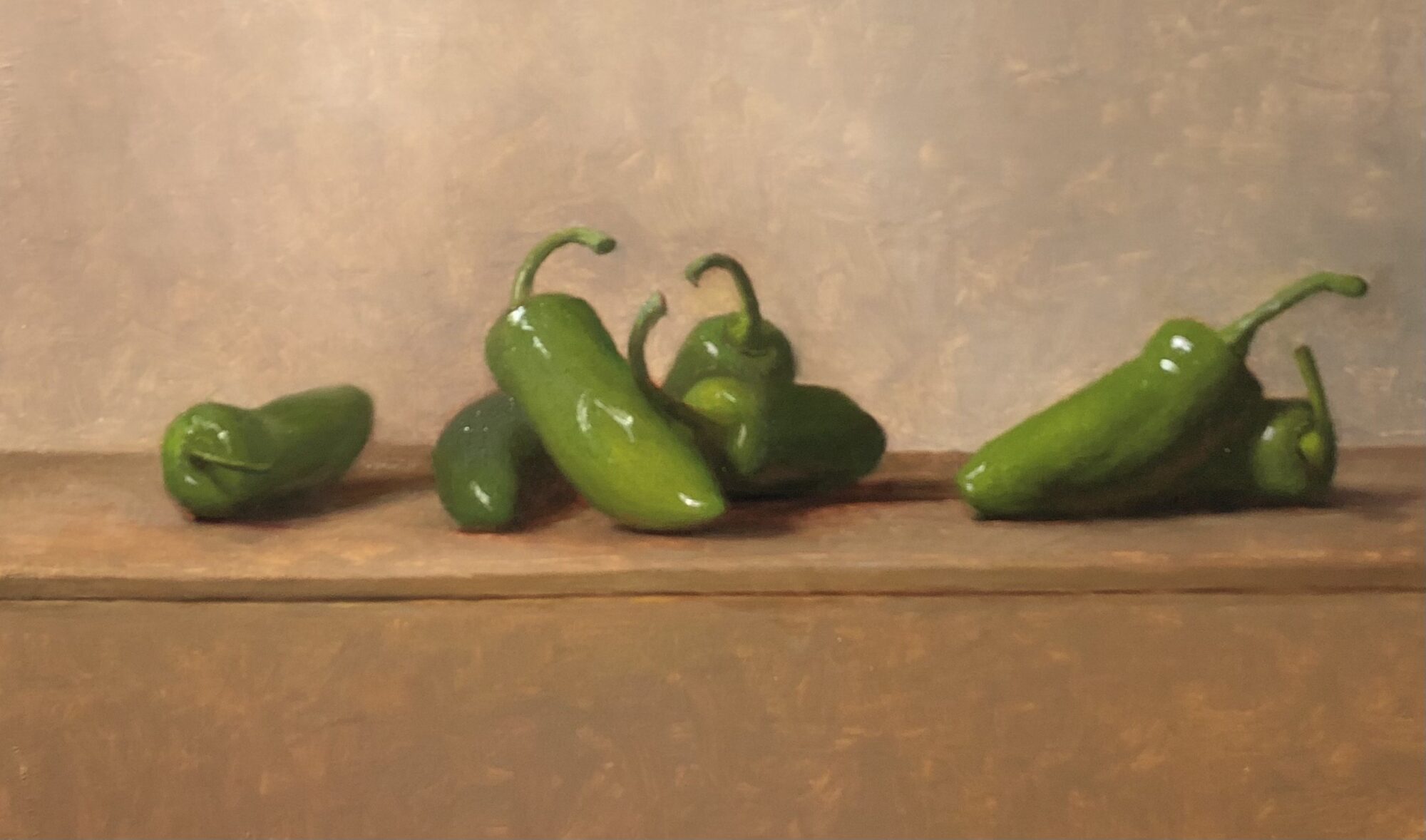
FIRE:
High chroma or heat, perhaps combine both in this week’s painting. Jalapenos, chilis, and such make for great subject matter. Or take the more literal route and paint some burnt matchsticks or candles.
METAL:
Any gold, copper, silver, or pewter will make for a great painting – also, coins, utensils, or perhaps your favorite Metallica album…
AIR:
The iridescent delicacy of feathers, the atmosphere of an interior, this week should make us feel a bit light on our feet.
WOOD:
From antique and patina, to glossy and dark finish, there’s much to strip away while painting these sometimes knotty textures.